In the superyacht and ultra-high-net-worth residential world, very little is accidental. Spaces are engineered, detailed and commissioned to perform. We obsess over materials, acoustics, climate control and systems integration.
Yet one of the most powerful influences on how people feel each day is often treated as static.
Light.
Circadian lighting is not about making spaces look impressive. It is about designing light to follow time as well as architecture. When properly implemented, it supports alertness, sleep quality and long-term wellbeing without drawing attention to itself.
Traditional lighting design focuses on three things: visibility, aesthetics and atmosphere. Circadian lighting adds a fourth consideration: biological effect.
Human physiology runs on an internal 24-hour cycle known as the circadian rhythm. This rhythm influences sleep-wake cycles, hormone production, cognitive performance, mood and recovery. The most powerful external cue regulating that rhythm is light, particularly its intensity and spectral content.
Higher intensity, blue-enriched light in the morning and daytime supports alertness and helps suppress melatonin. Warmer, lower intensity light in the evening allows melatonin production to rise and prepares the body for rest.
It is important to be precise here. Circadian lighting does not cure jet lag or replace daylight. But carefully controlled artificial light can support the body when natural light exposure is limited or disrupted.
When lighting is aligned with natural biological patterns, the benefit is not just visual comfort. It can support how people actually live, travel and recover.
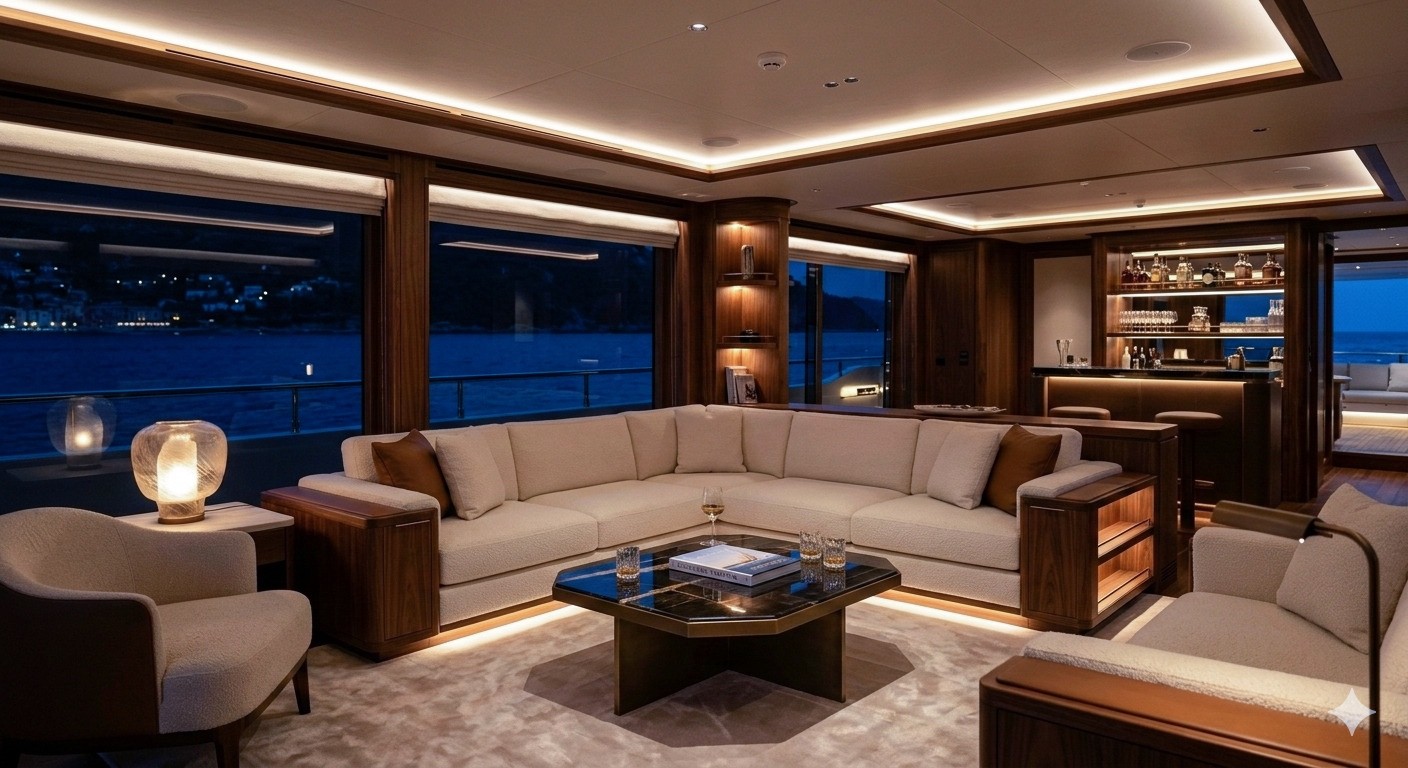
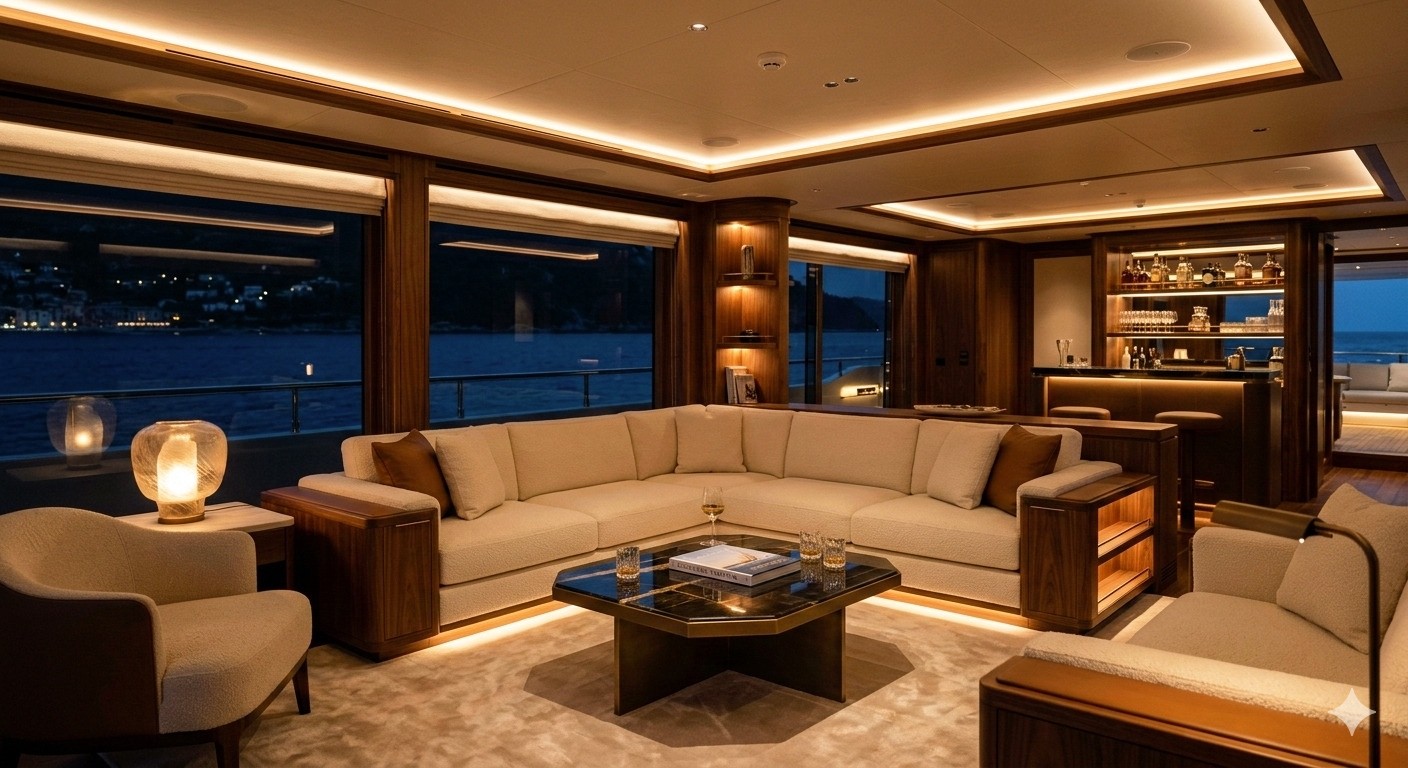
Circadian disruption is common at sea.
Owners, guests and crew frequently cross time zones. Charter schedules compress days. Interior spaces, particularly lower deck cabins, spas and crew areas, may receive little direct daylight. Even on yachts with generous glazing, operational life often takes place away from consistent solar cues.
A properly specified circadian lighting system can:
This is not about dramatic colour shifts. When done well, the changes are subtle and barely perceptible.
In this context, lighting becomes part of the yacht’s broader wellbeing strategy, alongside air quality, acoustics, stabilisation and thermal comfort. It is infrastructure, not decoration.
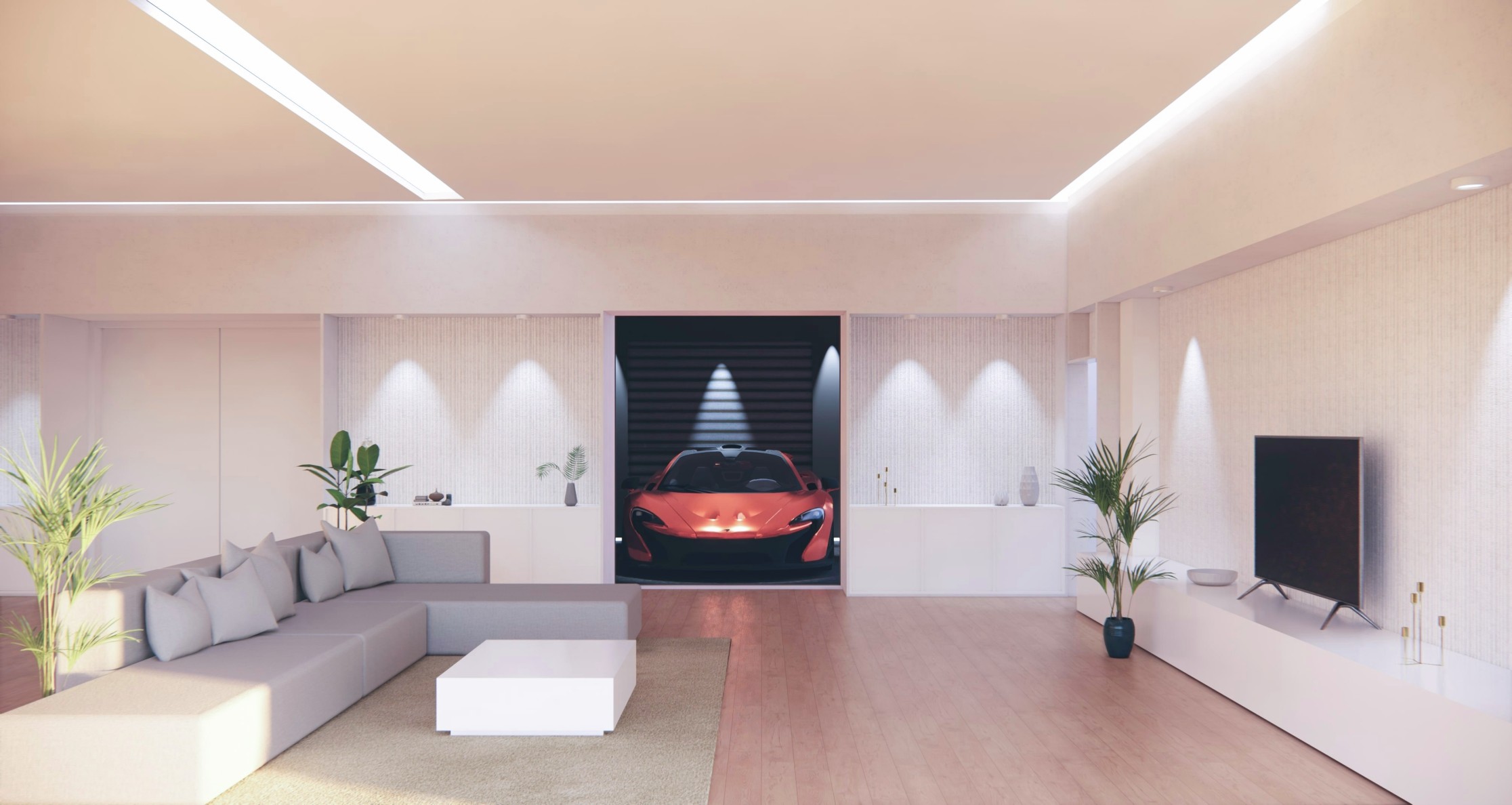
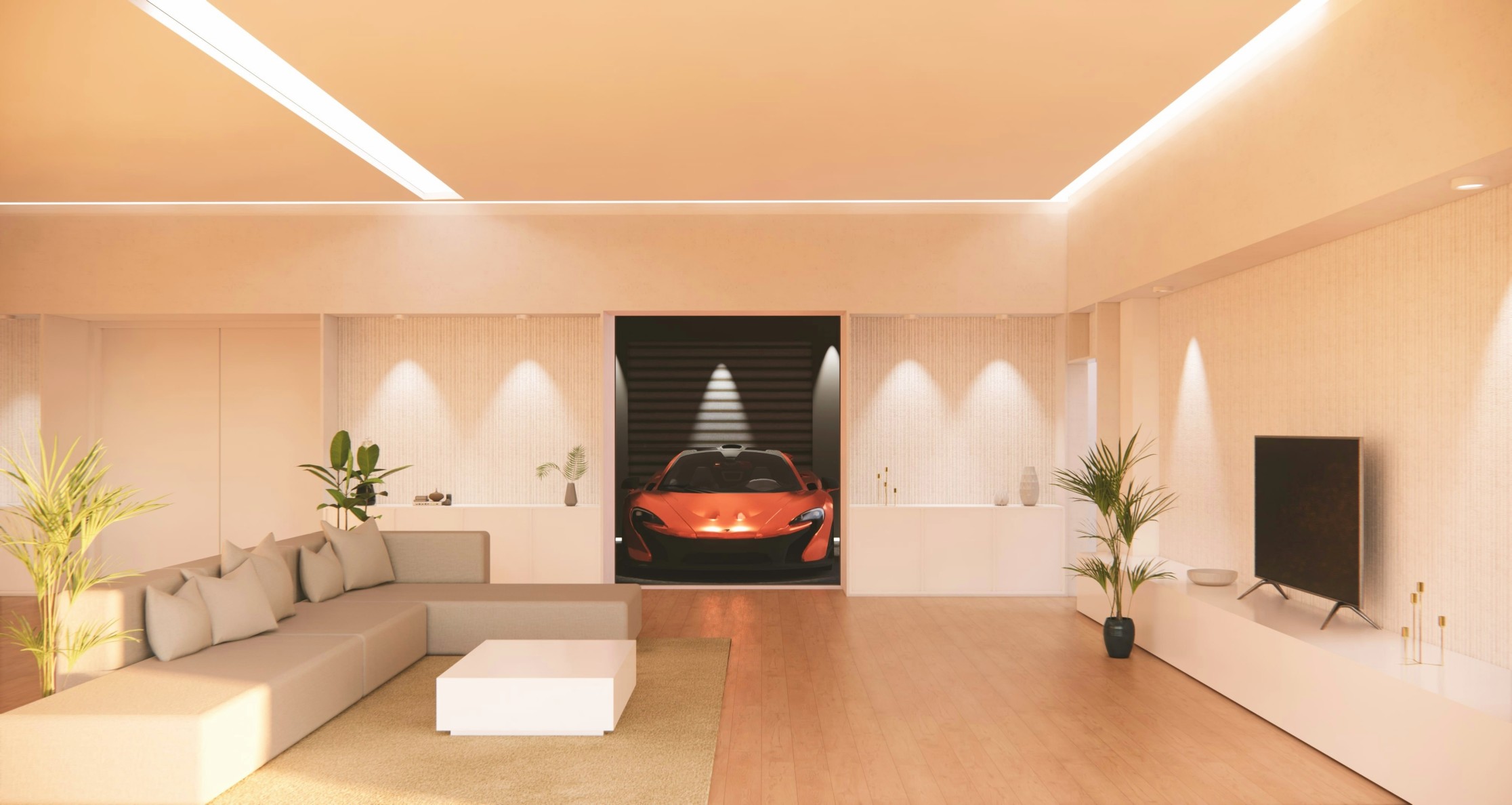
The same thinking applies to ultra-high-end homes.
Wellness-led design is now common. We see advanced HVAC filtration, water treatment, recovery facilities and biophilic architecture integrated from the outset. Lighting should be part of that same conversation.
In large residences, especially multi-level properties or homes in dense urban environments, occupants may not receive consistent daylight exposure throughout the day. Basement gyms, cinemas, dressing rooms, galleries and internal corridors often rely entirely on artificial light.
A tunable, centrally controlled lighting system can:
The key is that these adjustments happen automatically, integrated into the wider control system. Occupants should not need to think about it.
In our sector, the real differentiator is not the term circadian lighting. It is control and commissioning.
Effective systems require:
Without proper calibration, circadian lighting quickly becomes a marketing label applied to a tunable system with a few preset scenes.
When designed properly, it is seamless. The space simply feels right at different times of day.
That outcome depends on early coordination between lighting designers, electrical engineers, control specialists and integrators. It is not something that can be added at the end of a project without compromise.
In both superyachts and UHNW residences, true luxury is increasingly about performance you do not have to think about.
Lighting should do more than illuminate finishes. It should quietly support how people travel, work, recover and sleep.
Circadian lighting, when approached as a properly engineered system rather than a design trend, represents the next step in intelligent, wellness-focused environments. It combines lighting design, control strategy and commissioning discipline to create spaces that respond to human biology throughout the day.
The result is not theatrical. It is subtle. And in this market, subtle performance is often the highest form of luxury.
Circadian lighting is not a product that can be selected from a catalogue. It is a strategy that must be defined early, engineered correctly and commissioned carefully.
For superyachts and UHNW residences, that means aligning lighting design, control systems, electrical infrastructure and integration from the outset. It requires an understanding of melanopic response, dimming behaviour, driver compatibility, shading coordination and user interface design. Most importantly, it requires someone taking ownership of how the system performs once the project leaves the drawing board.
At SMART Technology Advisers, our lighting control consultancy focuses on exactly that intersection between design intent and technical delivery. We work alongside designers, shipyards, architects and integrators to ensure circadian strategies are not just specified, but properly implemented and commissioned.
Because in this market, performance is not optional. It is expected.
Interested in how circadian lighting can be implemented effectively in superyachts or UHNW residences? Get in touch with our SMART Technology Advisers team to continue the conversation.





.svg)